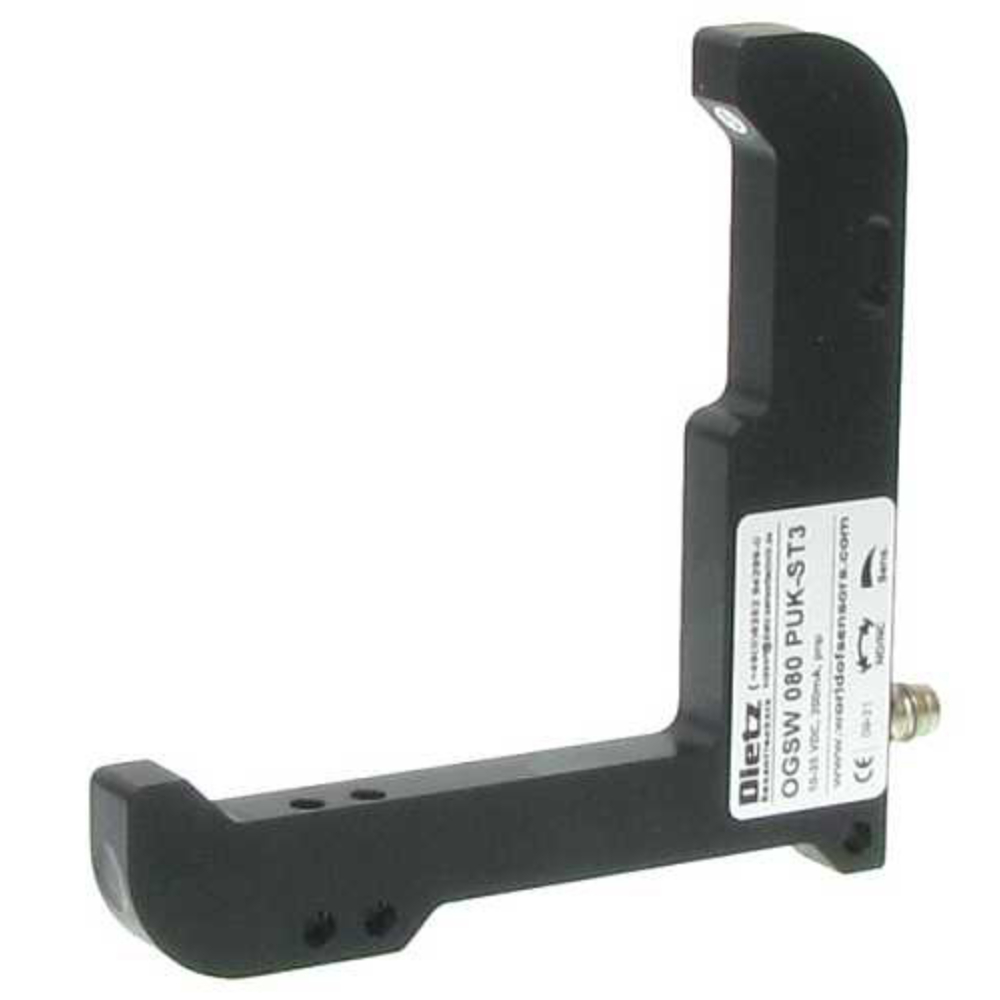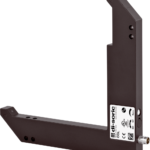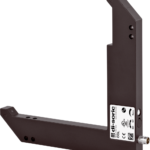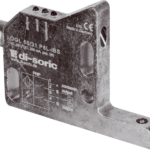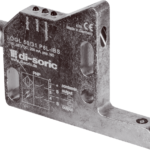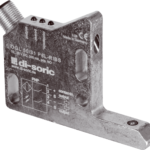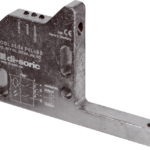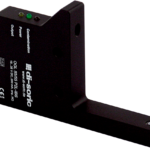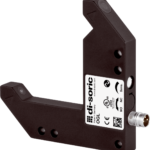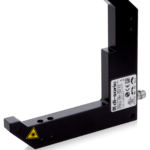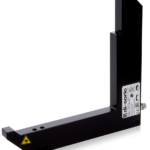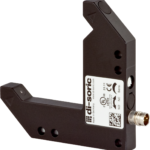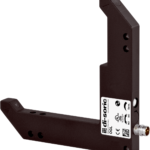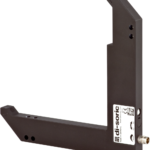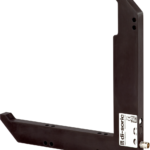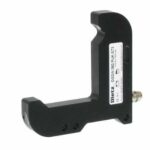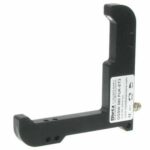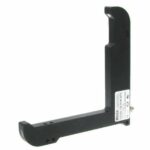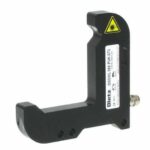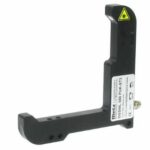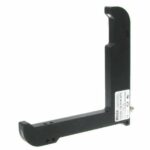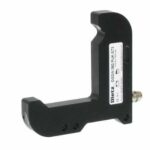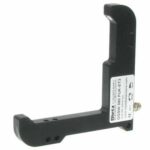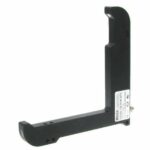

Angled Fork Light Barriers
Angled and L-Shaped Fork Light Barriers for Tight-Space Detection and Offset Mounting
Angled fork light barriers operate on the through-beam principle, but use a bent or L-shaped housing to position the sensing gap where mounting space, part flow, or machine geometry makes a standard U-shaped fork less practical. They are well suited to compact installations for detecting labels, edges, small parts, and product presence in packaging, assembly, paper converting, and similar industrial automation applications.
IBIS supplies angled fork light barriers from di-soric and Dietz, with a stronger focus on di-soric models across this range. Many di-soric angled fork sensors are available with IO-Link, making them a stronger choice where parameter setting, diagnostics, status monitoring, and easier machine changeover are important. Dietz angled fork sensors remain useful conventional options in selected sizes and light-source types, but currently do not offer IO-Link models in this family.
Available light sources include infrared, visible red, laser visible red, and high-power versions for more demanding sensing conditions. Common fork openings range from 50 mm to 120 mm, with selected larger and special-format models also available, giving users options for different part sizes, sensing precision requirements, and installation constraints.
- Material: nickel-plated brass
- Temperature: -40°C ... +200°C


Compare Angled and L-Shaped Fork Light Barriers
Image | Brand | Part Number | Fork Opening | Light Source | Resolution | Switching Output | Interface | Connection | Quantity | Product Details | Add to Cart |
|---|---|---|---|---|---|---|---|---|---|---|---|
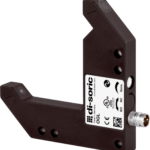
| di-soric | 50 / 31 mm | LED-High Power | 0 | pnp | 200 mA | NO | 0 | M12 | 4-pin | Max: 100000 Min: 0 Step: 1 | ||||
| di-soric | 150 / 150 mm | LED-High Power | 3.0 mm | Push-pull | 100 mA | NO/NC | switchable | 0 | M8 | 3-pin | Max: 100000 Min: 0 Step: 1 | ||||
| di-soric | 50 / 50 mm | LED-Infrared | 0.3 mm | Push-pull | 100 mA | NO/NC | switchable | IO-Link | M8 | 3-pin | Max: 100000 Min: 1 Step: 1 | ||||
| di-soric | 50 / 50 mm | LED-Visible Red | 0.3 mm | Push-pull | 100 mA | NO/NC | switchable | IO-Link | M8 | 3-pin | Max: 100000 Min: 1 Step: 1 | ||||
| di-soric | 80 / 80 mm | LED-Infrared | 0.3 mm | Push-pull | 100 mA | NO/NC | switchable | IO-Link | M8 | 3-pin | Max: 100000 Min: 1 Step: 1 | ||||
| di-soric | 80 / 80 mm | LED-Visible Red | 0.3 mm | Push-pull | 100 mA | NO/NC | switchable | IO-Link | M8 | 3-pin | Max: 100000 Min: 1 Step: 1 | ||||
| di-soric | 120 / 120 mm | LED-Infrared | 0.5 mm | Push-pull | 100 mA | NO/NC | switchable | IO-Link | M8 | 3-pin | Max: 100000 Min: 1 Step: 1 | ||||
| di-soric | 120 / 120 mm | LED-Visible Red | 0.5 mm | Push-pull | 100 mA | NO/NC | switchable | IO-Link | M8 | 3-pin | Max: 100000 Min: 1 Step: 1 | ||||
| di-soric | 50 / 31 mm | LED-High Power Red | 0 | pnp | 200 mA | NO | 0 | M12 | 4-pin | Max: 100000 Min: 1 Step: 1 | ||||
| di-soric | 50 / 31 mm | LED-High Power Red | 0 | pnp | 200 mA | NO | 0 | M12 | 4-pin | Max: 100000 Min: 1 Step: 1 | ||||
| di-soric | 55 / 54 mm | LED-High Power Red | 0 | pnp | 200 mA | NO | 0 | M12 | 4-pin | Max: 100000 Min: 1 Step: 1 | ||||
| di-soric | 55 / 55 mm | LED-High Power | 0 | pnp | 200 mA | NO | 0 | M12 | 4-pin | Max: 100000 Min: 0 Step: 1 | ||||
| di-soric | 50 / 50 mm | Laser-Visible Red | 0.05 mm | Push-pull | 100 mA | NO/NC | switchable | IO-Link | M8 | 3-pin | Max: 100000 Min: 1 Step: 1 | ||||
| di-soric | 80 / 80 mm | Laser-Visible Red | 0.05 mm | Push-pull | 100 mA | NO/NC | switchable | IO-Link | M8 | 3-pin | Max: 100000 Min: 1 Step: 1 | ||||
| di-soric | 120 / 120 mm | Laser-Visible Red | 0.1 mm | Push-pull | 100 mA | NO/NC | switchable | IO-Link | M8 | 3-pin | Max: 100000 Min: 1 Step: 1 | ||||
| di-soric | 50 / 50 mm | LED-High Power | 2 mm | Push-pull | 100 mA | NO/NC | switchable | IO-Link | M8 | 3-pin | Max: 100000 Min: 1 Step: 1 | ||||
| di-soric | 80 / 80 mm | LED-High Power | 2 mm | Push-pull | 100 mA | NO/NC | switchable | IO-Link | M8 | 3-pin | Max: 100000 Min: 1 Step: 1 | ||||
| di-soric | 120 / 120 mm | LED-High Power | 2 mm | Push-pull | 100 mA | NO/NC | switchable | IO-Link | M8 | 3-pin | Max: 100000 Min: 1 Step: 1 | ||||
| Dietz | 50 mm | LED-Visible Red | 0.5 mm | pnp | 100 mA | NO/NC | switchable | 0 | M8 | 3-pin | Max: 100000 Min: 1 Step: 1 | ||||
| Dietz | 80 mm | LED-Visible Red | 0.7 mm | pnp | 100 mA | NO/NC | switchable | 0 | M8 | 3-pin | Max: 100000 Min: 1 Step: 1 | ||||
| Dietz | 120 mm | LED-Visible Red | 1.0 mm | pnp | 100 mA | NO/NC | switchable | 0 | M8 | 3-pin | Max: 100000 Min: 1 Step: 1 | ||||
| Dietz | 50 mm | Laser-Visible Red | 0.05 mm | pnp | 100 mA | NO/NC | switchable | 0 | M8 | 3-pin | Max: 100000 Min: 1 Step: 1 | ||||
| Dietz | 80 mm | Laser-Visible Red | 0.05 mm | pnp | 100 mA | NO/NC | switchable | 0 | M8 | 3-pin | Max: 100000 Min: 1 Step: 1 | ||||
| Dietz | 120 mm | Laser-Visible Red | 0.05 mm | pnp | 100 mA | NO/NC | switchable | 0 | M8 | 3-pin | Max: 100000 Min: 1 Step: 1 | ||||
| Dietz | 50 mm | LED-Infrared | 0.05 mm | pnp | 100 mA | NO/NC | switchable | 0 | M8 | 3-pin | Max: 100000 Min: 1 Step: 1 | ||||
| Dietz | 80 mm | LED-Infrared | 0.05 mm | pnp | 100 mA | NO/NC | switchable | 0 | M8 | 3-pin | Max: 100000 Min: 1 Step: 1 | ||||
| Dietz | 120 mm | LED-Infrared | 0.05 mm | pnp | 100 mA | NO/NC | switchable | 0 | M8 | 3-pin | Max: 100000 Min: 1 Step: 1 |
How to Choose the Right Angled Fork Light Barrier
Choose the correct angled fork light barrier by matching the sensor to the part geometry, available mounting space, light source, and required output/interface.
- Fork opening: Match the opening to the target size, label width, gap, or product path.
- Housing shape: Angled and L-shaped designs help when the sensing gap must be offset from the mounting point or where space is restricted.
- Light source: Infrared is useful for general detection, visible red helps with setup and alignment, laser visible red supports finer detection tasks, and high-power versions help in more demanding sensing environments.
- Resolution: Use finer-resolution models for labels, edges, thin materials, and small-part detection.
- Interface and output: Many di-soric models include IO-Link for diagnostics and parameter setting, while other models use conventional switching outputs for simpler integration.
- Application environment: Consider dust, oil, ambient light, stability requirements, and available installation space.
Applications for Angled Fork Light Barriers
Angled fork light barriers are used where a fixed sensing gap is needed, but a standard straight U-shaped housing is less practical because of machine layout or installation space.
- Label detection on packaging and converting equipment
- Edge detection and positioning tasks
- Part presence monitoring in assembly systems
- Product counting in conveyors and handling equipment
- Detection in compact stations where offset mounting is required
- Applications requiring stable fixed-gap sensing with limited installation space
Why Choose Angled Fork Light Barriers?
Angled fork light barriers help solve mounting and sensing problems where the beam must be positioned around tooling, guides, brackets, or machine structures. IBIS supplies options from di-soric and Dietz, with di-soric offering broader feature depth in this family, including IO-Link on many models for applications that benefit from easier setup, diagnostics, and machine integration.
Need Help Selecting an Angled Fork Light Barrier?
Our technical team can help compare angled fork sensor options by fork opening, light source, resolution, output type, interface, and application fit.
Frequently Asked Questions About Angled Fork Light Barriers
What are angled fork light barriers used for?
They are used for fixed-gap detection of labels, edges, small parts, and product presence where machine layout or mounting space makes a standard fork shape less practical.
How are angled fork light barriers different from standard U-shaped fork sensors?
They use a bent or L-shaped housing that repositions the sensing gap, making them easier to mount in tight or offset installations.
Are IO-Link angled fork models available?
Yes. Many di-soric angled fork models are available with IO-Link for parameter setting, diagnostics, and easier machine integration
What light sources are available in angled fork light barriers?
Depending on model, angled fork sensors are available with infrared, visible red, laser visible red, and high-power light sources.
How do I choose the right fork opening?
Choose the fork opening based on the target size, label width, product path, and the machine space available around the sensing point.
Where are angled fork light barriers commonly used?
They are commonly used in packaging, assembly, paper converting, small-part handling, and other industrial automation systems requiring compact fixed-gap target detection.