
Small Diameter Conduits for Fiber Optic Bundles and Wire Protection
Compact protective conduits for fiber optics, sensor leads, and delicate wire bundles
Small diameter protective conduits are used where fiber optic bundles, sensor leads, fine wires, and compact cable assemblies require protection in confined spaces or precision applications.
These conduit families are selected where small internal diameters, controlled bending, and low-stretch or no-stretch construction help protect delicate glass or plastic fibers from over-bending, tensile loading, abrasion, and installation damage. Depending on the family, jacket options may include PVC, silicone, polyurethane, or specialized dissipative materials for application-specific protection.
IBIS Electro-Products supplies FLEXA small diameter conduit systems for industrial applications requiring compact cable protection, fiber optic bundle protection, sensor lead routing, and other precision small-diameter protection requirements.
Small Diameter Conduit Families
Small diameter conduit families are differentiated by conduit construction, jacket material, flexibility, and the protection requirements of the application.
Medical, Sensor, and Fiber Optic Protection
PSL-VA
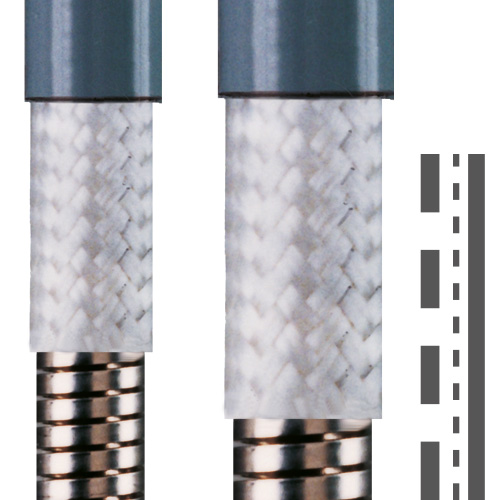
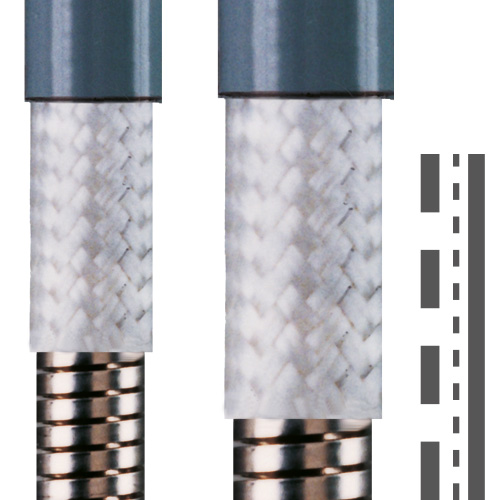
Thin-helix silicone-jacketed conduit for delicate medical, sensor, and fiber optic bundles
View ProductsHighly Flexible Small Diameter Conduits
Specialized Small Diameter Conduit Families
FDW-VA
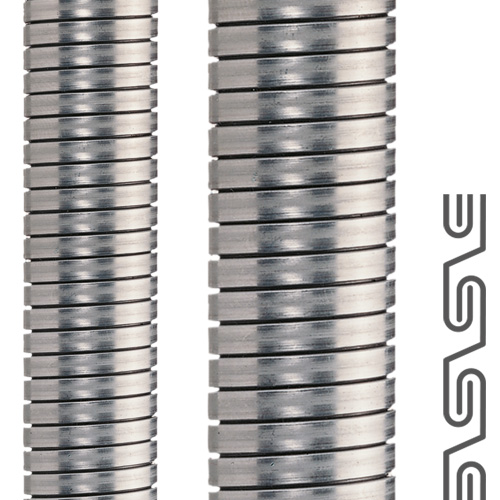
Flat stainless steel helix for compact base construction and custom over-jacketing applications
View ProductsFLEXAgraff-VA
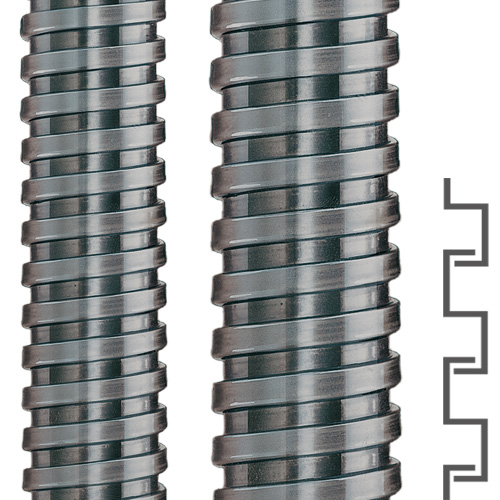
Stronger-wall stainless steel conduit for compact high-temperature applications
View ProductsSmall Diameter Conduit Selection Table
| Family | Best For | Construction / Jacket | Why Choose It |
|---|---|---|---|
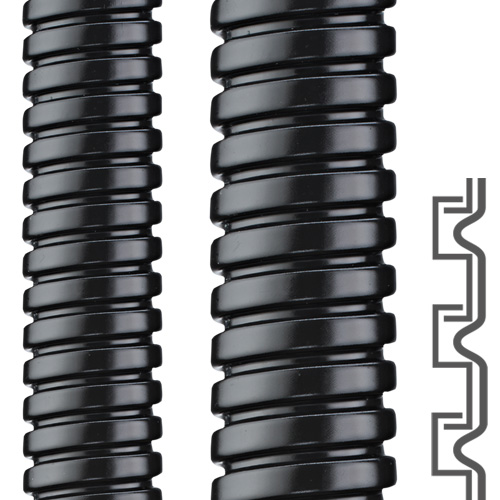
| PS-VA | medical and sensor applications | stainless / silicone | compact, high-flex, clean-environment use |
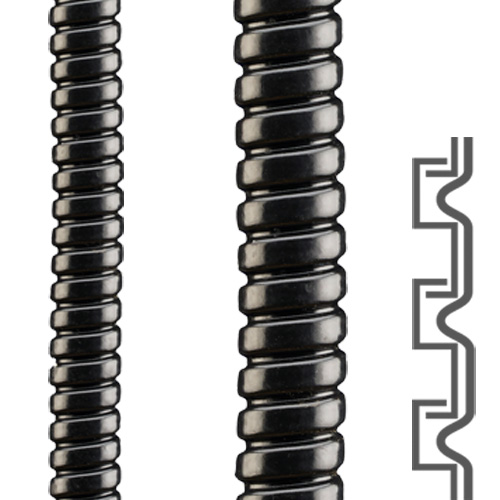
| PSL-VA | medical, sensor, pharma applications | thin stainless helix / silicone | compact protection for delicate bundles |
| SPR-VA-PU | laser and welding fiber protection | stainless / yellow PU | specialized laser-fiber protection |
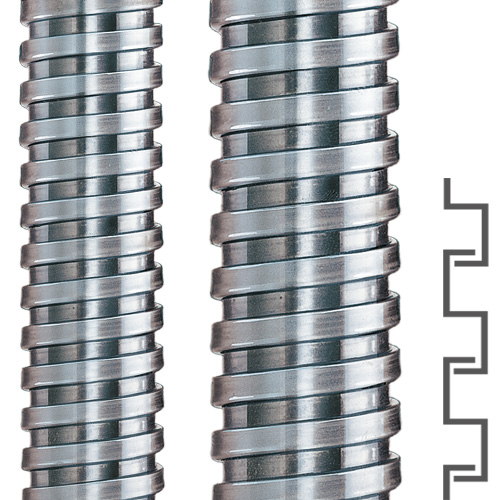
| SPR | compact general-purpose routing | galvanized steel | high flexibility, small profile |
| SPR-PVC | protected compact routing | steel / PVC | added jacket protection |
| SPR-VA | compact stainless routing | stainless steel | no-stretch, high-flex stainless option |
| SPR-VA-PVC | compact jacketed stainless routing | stainless / PVC | high-flex stainless with jacket |
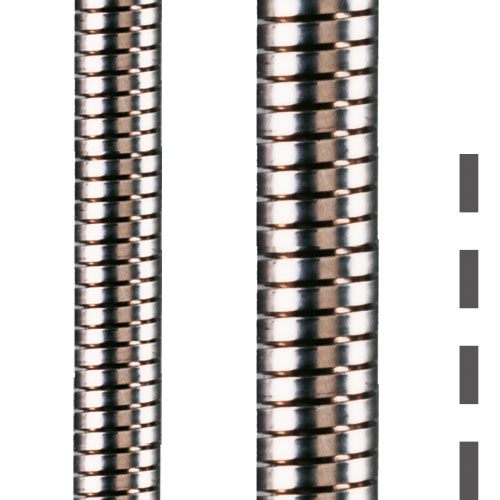
| FDW-VA | custom over-jacketing and base helix construction | flat stainless steel helix | compact base construction for specialized builds |
| FLEXAgraff-VA | stronger-wall small diameter use | stainless double fold | stronger construction in compact format |
| SPR-PVC-ESD | static-sensitive applications | steel / dissipative PVC | ESD-jacket small diameter protection |
How to Choose the Right Small Diameter Conduit
Small diameter conduit selection depends on the bundle size, bend limitation requirement, stretch resistance, jacket material, and the sensitivity of the wires or fibers being protected.
Fiber Optic and Delicate Bundle Protection
Use these families where the application involves glass or plastic fiber bundles, sensor leads, or delicate cable assemblies that require compact protection and controlled bending.
This is where limited bend radius, bend limiting, and low-stretch or no-stretch construction are especially important to help prevent damage from over-bending or tensile loading.
Jacketed vs. Unjacketed Small Diameter Conduits
Use jacketed families where the application needs added outer protection, smoother handling, environmental resistance, static dissipation, or specialized performance such as laser-fiber protection.
Use unjacketed metal families where compact metallic protection and routing performance are the main priorities.
Stainless Steel vs. Galvanized Construction
Use stainless steel where corrosion resistance, higher-temperature capability, or cleaner operating environments are important.
Use galvanized steel where durable general-purpose protection is required in a compact small diameter format.
Specialized Application Conduit Families
Use medical / sensor families where compact clean-environment performance is required.
Use laser-fiber families where welding or laser fiber protection is required.
Use ESD-rated families where static dissipation is important.
Applications for Small Diameter Conduits
Small diameter conduits are commonly used where fiber optics, small wire bundles, and compact cable assemblies require protection in tight spaces or precision environments.
Typical applications include:
- fiber optic bundle protection
- sensor and measurement wiring
- medical and clean-environment equipment
- machine lighting and sensor optics
- OEM cable assemblies
- laser and welding fiber protection
- robot arm wire harnessing
- compact stainless protective routing
- applications requiring bend limiting or low-stretch protection
Frequently Asked Questions About Small Diameter Conduits
Which small diameter conduit is best for fiber optic bundles?
The best starting point is a small diameter conduit family designed for fiber optics, sensor leads, or delicate bundle protection where compact size, controlled bending, and low-stretch construction are important. Final selection depends on the bundle type, routing path, jacket requirement, and operating environment.
When is bend limiting important in a small diameter conduit?
Bend limiting is important where over-bending could damage delicate glass or plastic fibers inside the conduit.
When should I choose a jacketed small diameter conduit?
Choose a jacketed small diameter conduit where the application requires smoother handling, environmental resistance, static dissipation, or specialized outer protection.
When should I choose stainless steel small diameter conduit?
Choose stainless steel where corrosion resistance, higher-temperature capability, or clean-environment performance are important.
Can small diameter conduit be used for medical or clean-environment applications?
Yes. Small diameter conduit can be used for medical or clean-environment applications when the conduit family, core construction, and jacket material match the operating requirements. Silicone-jacketed and stainless steel options are often preferred where compact protection, controlled bending, cleaner operation, or corrosion resistance are important.
What is the difference between PS-VA and PSL-VA?
PS-VA uses a silicone-jacketed stainless steel conduit for compact medical, sensor, and fiber optic protection. PSL-VA uses a thinner stainless steel construction with silicone jacketing for more delicate, compact bundle routing.
Need Help Selecting the Right Small Diameter Conduit?
If you need help selecting the right small diameter conduit for your application, our team can help compare compact conduit families for fiber optics, sensor leads, medical equipment, OEM cable assemblies, and laser-fiber protection.