
Two Beam Differential Fork Light Barriers

Two Beam Differential Fork Light Barriers for Detecting Subtle Material Differences

Two beam differential fork light barriers use two light beams to compare very small differences in reflected light across a target area. This differential sensing method makes them well suited for detecting subtle contrast changes, transparent materials, thin films, labels, and other difficult targets that may be missed by standard fork sensors.

Available in 30 mm, 50 mm, and 90 mm fork openings, these sensors are commonly used in labelling systems, packaging machinery, and paper converting applications where reliable detection of fine material differences is required. They are especially useful where clear or low-contrast materials must be identified with consistent repeatability.

Compare Two Beam Differential Fork Light Barriers

Showing 1 – 3 of 3 results Showing all 3 results Showing the single result No results found
Sort by Name A – Z
Filters Sort results
Reset Apply
Image
Part Number
Fork Opening
Light Source
Resolution
Quantity
Product Details
Add to Cart
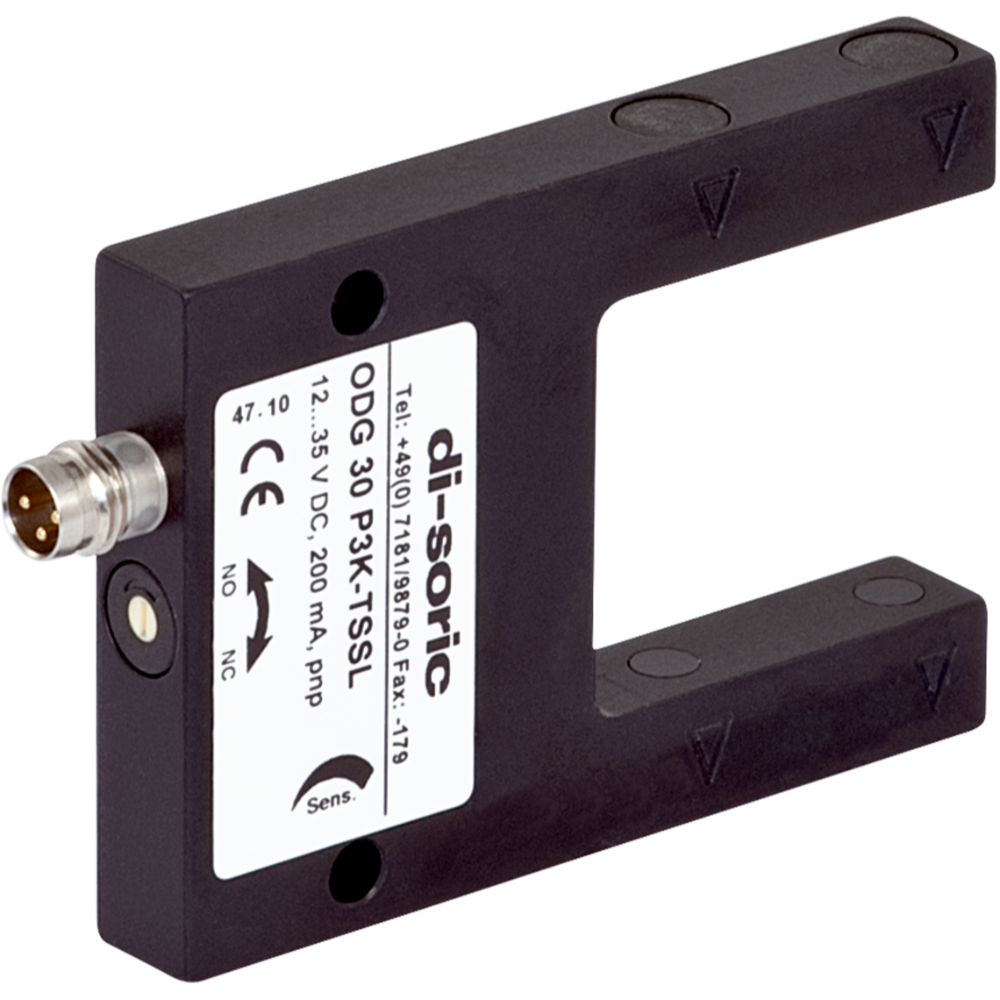
di-soric ODG-30-P3K-TSSL two beam differential fork light barrier 30 mm
30 mm
LED-Infrared
0.07 mm
Max: 100000
Min: 1
Step: 1
di-soric ODG-50-P3K-TSSL two beam differential fork light barrier 50 mm
50 mm
LED-Infrared
0.1 mm
Max: 100000
Min: 1
Step: 1
90 mm
LED-Infrared
0.25 mm
Max: 100000
Min: 1
Step: 1

How to Choose a Two Beam Differential Fork Light Barrier

Select the fork opening based on the material width and machine geometry. For transparent films, labels, thin materials, and other low-contrast targets, differential sensing helps detect subtle remission differences that standard fork sensors may miss. Also consider the required resolution, installation space, and switching output for the application.