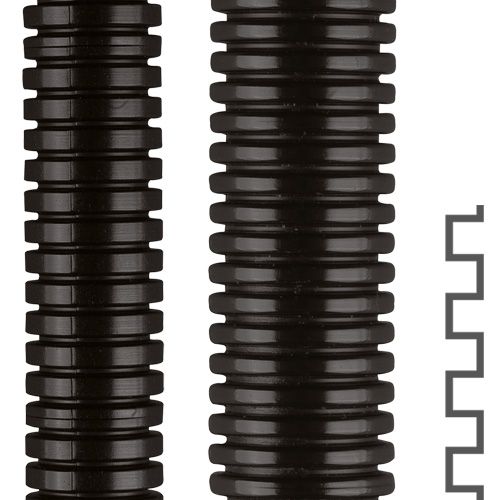

ROHRflex® Corrugated Polyurethane Conduit

Flexible Polyurethane Conduit for Low-Temperature and Oil-Exposed Cable Protection

ROHRflex® corrugated polyurethane conduit provides flexible cable protection for industrial wiring, machinery, equipment, and installations where low-temperature performance, oil exposure, abrasion resistance, or repeated movement are important. Polyurethane conduit is commonly selected where flexibility and material resilience are required in demanding cable routing applications.

IBIS Electro-Products supplies ROHRflex® PU corrugated polyurethane conduit from FLEXA for industrial wire and cable protection applications. Use this page to review the ROHRflex® PU conduit family and compare it with other ROHRflex® plastic conduit options when flexibility, oil resistance, abrasion behavior, and installation environment are key selection factors.

Applications for Corrugated Polyurethane Conduit

ROHRflex® PU corrugated polyurethane conduit is commonly used in:

  • industrial machinery and equipment
  • moving cable routing and flexible wire protection
  • applications exposed to oil or lubricants
  • low-temperature industrial environments
  • automation systems and control equipment
  • installations requiring abrasion-resistant flexible conduit
  • equipment wiring where durable polyurethane material is preferred

How to Choose Corrugated Polyurethane Conduit

Choose ROHRflex® PU when the application requires a very flexible polyurethane conduit with strong performance in low-temperature, oil-exposed, or moving cable environments. Compare conduit size, cable bundle requirements, bend behavior, material exposure, and fitting compatibility before selecting the final conduit configuration.

Material requirement — choose polyurethane where PU material compatibility, flexibility, oil exposure, or abrasion resistance is important for the installation.

Flexibility requirement — use ROHRflex® PU where moving cable routing, repeated bending, or tight installation paths require a more flexible conduit.

Environmental exposure — verify low-temperature, oil, lubricant, moisture, and abrasion exposure requirements before selecting polyurethane conduit.

Cable routing — select the conduit size based on cable outside diameter, bundle size, bend behavior, and available installation space.

Fitting compatibility — verify conduit outside diameter and connection requirements when pairing ROHRflex® PU conduit with compatible conduit fittings.

Polyurethane vs Polypropylene and Nylon Corrugated Conduit

ROHRflex® PU is typically selected where flexibility, low-temperature performance, oil exposure, and abrasion behavior are key requirements. ROHRflex® PP is more focused on humidity stability and lightweight polypropylene construction, while ROHRflex® nylon conduit families are generally used where broader PA6 / PA12 performance options, higher mechanical strength, railway suitability, or specialized dynamic routing variants are required.

Need help selecting the right polyurethane conduit?

Choosing the right ROHRflex® PU conduit depends on conduit size, flexibility, low-temperature exposure, oil exposure, abrasion requirements, cable routing needs, and fitting selection. IBIS Electro-Products can help confirm whether polyurethane conduit is the right fit for your application.