Inductive Tube Sensors

di-soric Inductive Tube Sensors for Part Detection and Counting

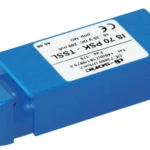
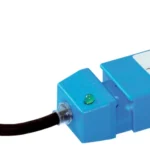
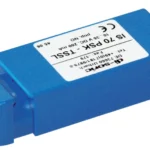
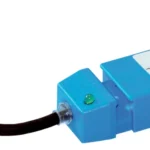
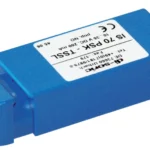
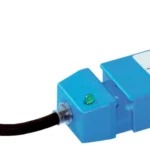
di-soric inductive tube sensors are designed for detecting and counting metallic parts moving through supply tubes.

Unlike conventional ring sensors, the tube does not need to pass through a closed sensing ring. The sensor mounts externally to the tube, allowing it to be installed or repositioned without dismantling the supply tube.

Models are available in IS static and ISDP dynamic versions with NPN or PNP outputs, a 14 mm switching distance, and either an M8 connector or short 0.04 m pigtail with M12 connector.

Inductive Tube Sensors

di-soric Inductive Tube Sensors

Showing 1 – 8 of 8 results Showing all 8 results Showing the single result No results found
Sort by Name A – Z
Filters Sort results
Reset Apply
Image
Brand
Part Number
Detection Principle
Switching Output
Response / Release Time
Connection
Quantity
Product Details
Add to Cart
IS 70 NSK-TSSL di-soric Inductive Tube Sensor, Static, NPN NO, M8
di-soric
Static
NPN | NO | 200 mA
0.5 / 100 ms
Axial M8 | 3-pin
Max: 100000
Min: 1
Step: 1
IS 70 NSLK-K-BS di-soric Inductive Tube Sensor, Static, NPN NO, M12 Pigtail
di-soric
Static
NPN | NO | 200 mA
0.5 / 100 ms
Pigtail M12 | 3-pin
Max: 100000
Min: 1
Step: 1
IS 70 PSK-TSSL di-soric Inductive Tube Sensor, Static, PNP NO, M8
di-soric
Static
PNP | NO | 200 mA
0.5 / 100 ms
Axial M8 | 3-pin
Max: 100000
Min: 1
Step: 1
IS 70 PSLK-K-BS di-soric Inductive Tube Sensor, Static, PNP NO, M12 Pigtail
di-soric
Static
PNP | NO | 200 mA
0.5 / 100 ms
Pigtail M12 | 3-pin
Max: 100000
Min: 1
Step: 1
ISDP 70 NSK-TSSL di-soric Inductive Tube Sensor, Dynamic, NPN NO, M8
di-soric
Dynamic
NPN | NO | 200 mA
0.2 / 100 ms
Axial M8 | 3-pin
Max: 100000
Min: 1
Step: 1
ISDP 70 NSLK-K-BS di-soric Inductive Tube Sensor, Dynamic, NPN NO, M12 Pigtail
di-soric
Dynamic
NPN | NO | 200 mA
0.2 / 100 ms
Pigtail M12 | 3-pin
Max: 100000
Min: 1
Step: 1
ISDP 70 PSK-TSSL di-soric Inductive Tube Sensor, Dynamic, PNP NO, M8
di-soric
Dynamic
PNP | NO | 200 mA
0.2 / 100 ms
Axial M8 | 3-pin
Max: 100000
Min: 1
Step: 1
ISDP 70 PSLK-K-BS di-soric Inductive Tube Sensor, Dynamic, PNP NO, M12 Pigtail
di-soric
Dynamic
PNP | NO | 200 mA
0.2 / 100 ms
Pigtail M12 | 3-pin
Max: 100000
Min: 1
Step: 1

How Inductive Tube Sensors Work

Inductive tube sensors detect metallic objects moving through a tube by monitoring changes in the magnetic field within the sensing area adjacent to the tube.
When a metallic target enters the sensing field, the sensor changes its output state so the machine control system can respond.
Because the sensor is mounted outside the tube, the target remains contained within the existing material-handling path.

External Mounting on Supply Tubes

One of the main characteristics of this sensor design is the external mounting arrangement.
The sensor can be attached to the outside of the tube and adapted to different tube cross-sections without dismantling the supply tube.
This can simplify installation, adjustment and replacement where the existing tube should remain in place.

When to Choose an Inductive Tube Sensor

An inductive tube sensor is a good choice when metallic parts need to be detected or counted while moving through a supply tube and the sensor must be mounted externally.

Because the sensor attaches to the outside of the tube, the tube does not need to pass through a closed sensing ring. This can simplify installation where the supply tube is already installed or should remain connected.

Inductive tube sensors are particularly useful for:

  • metallic part detection through supply tubes
  • part counting
  • accumulation monitoring
  • feeder and material-transfer systems
  • applications where the supply tube should not be disconnected for sensor installation

If the metallic target can pass directly through a sensing opening, a standard inductive ring sensor may be another option.

Static vs. Dynamic Inductive Tube Sensors

Inductive tube sensors are available in both static and dynamic versions.

IS Static Tube Sensors

IS models use a static evaluation principle.

They are suited to applications where the presence of a metallic target needs to be detected while it is within the sensing area.

IS models have a response/release time of approximately 0.5 / 100 ms.

ISDP Dynamic Tube Sensors

ISDP models use a dynamic evaluation principle.

They are intended for moving targets and provide a faster response to changes in the sensing condition, making them useful for faster part-detection and counting applications.

ISDP models have a response/release time of approximately 0.2 / 100 ms.

Inductive Tube Sensors vs. Inductive Ring Sensors

Both sensor types use inductive sensing to detect metallic targets, but the mounting arrangement is different.

Inductive tube sensors mount externally to a supply tube and detect metallic parts moving through the tube. The tube does not need to pass through a closed sensing opening.

Inductive ring sensors use a ring-shaped sensing opening, with the metallic target passing through the sensor.

Choose a tube sensor when external mounting on an existing supply tube is preferred. Choose a ring sensor when the target can pass directly through the sensor opening.

How to Choose an Inductive Tube Sensor

Sensing Mode

Choose IS static for general presence detection and accumulation-monitoring applications.

Choose ISDP dynamic where faster response to moving metallic targets is required.

Switching Output

Models are available with either:

  • PNP normally open
  • NPN normally open

Select the output type to match the machine control system.

Connection

Connection options include:

  • M8 connector
  • 0.04 m pigtail with M12 connector

The pigtail version can provide additional flexibility where installation space around the sensor is limited.

Switching Distance

IS and ISDP models have a 14 mm switching distance.

Response Time

Response time becomes more important as target speed increases.

The dynamic ISDP versions provide the faster response of the two sensing types.

Typical Applications

Inductive tube sensors can be used for applications such as:

  • metallic part detection in supply tubes
  • part counting
  • accumulation monitoring
  • feeder systems
  • automated part handling
  • assembly equipment
  • packaging equipment
  • production machinery
  • material transfer systems

Frequently Asked Questions About Inductive Tube Sensors

An inductive tube sensor detects metallic objects moving through a tube by sensing changes in the magnetic field adjacent to the tube.

No. These sensors mount externally to the tube, so the tube does not need to pass through a closed sensing ring.

Static models are intended for general presence detection, while dynamic models provide faster response to moving targets and can be useful for higher-speed counting and detection applications.

Models are available with PNP normally open or NPN normally open outputs.

Models are available with either an M8 connector or a short 0.04 m (1.5″) pigtail with M12 connector.

The current IS and ISDP models use a 14 mm switching distance.

Yes. The sensor mounts externally to the tube, so it can be installed or repositioned without routing the tube through a closed sensing ring or dismantling the supply tube.

No. Inductive tube sensors are intended for detecting metallic targets. If the application involves liquids or non-metallic materials, a capacitive ring sensor may be more appropriate.

Need Help Selecting an Inductive Tube Sensor?

IBIS Electro-Products can help review your application and compare sensing mode, output type, connection style and required response time.